
When a family searches for kidney transplant cost, they are usually looking for a number.But behind that number is a much bigger question:“Can we afford the treatment, and will the care be worth the expense?”
That is a very real concern. A kidney transplant is a major medical procedure, and families often have to think about hospital expenses while already managing years of kidney disease, dialysis and other healthcare costs.The difficulty is that there is no single cost that applies to every patient.
The final expense can depend on the type of transplant, the patient’s health, donor evaluation, hospitalisation, medicines, investigations and recovery. So the better way to understand kidney transplant cost is not simply to ask “How much?”, but also “What does that amount include?”
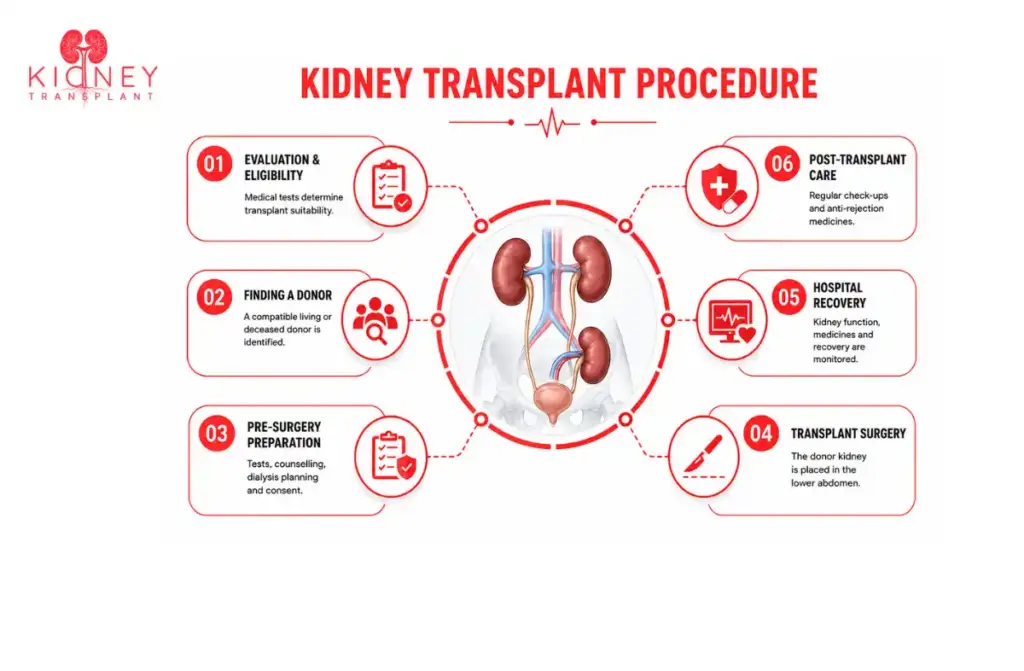
Why Kidney Transplant Costs Differ
A transplant is a personalised medical journey. The expenses for one patient may not look exactly like those for another.
For example, a patient who is otherwise medically stable may have a relatively straightforward hospital course, while another may require additional investigations, specialist care or a longer recovery.
| Factor | Why It Can Affect Cost |
| Type of transplant | Living-donor and deceased-donor pathways can involve different processes and expenses. |
| Patient’s health | Existing medical problems may require additional evaluation or specialist support. |
| Donor evaluation | A potential living donor requires a separate medical assessment. |
| Hospitalisation | ICU and ward charges can vary depending on the patient’s recovery. |
| Medicines and investigations | Testing and medication contribute to care before and after transplantation. |
| Unexpected treatment | Complications or additional medical needs can increase the final expense. |
This is why an online figure should be treated as a general guide, not a guaranteed bill.
Expert Insight
“The cost of transplantation should always be interpreted in the context of the patient’s medical condition and the care included in the estimate. A lower initial quote does not necessarily mean lower overall expenditure.”
What Are You Actually Paying For?
When a hospital gives a transplant estimate, the number becomes much more meaningful when you understand what sits behind it.
Depending on the centre and the patient’s treatment plan, the estimate may cover several stages of care.
- Evaluation before transplantation: The patient may need blood tests, imaging, cardiac assessment and other investigations to determine whether transplantation is appropriate and safe.
- Living-donor assessment: If a living donor is being considered, the donor also undergoes detailed evaluation. Donor safety is an essential part of the process
- The transplant procedure: Surgical, anaesthesia and operating-room expenses form part of the central treatment cost.
- Hospital and ICU care: The patient may require intensive monitoring immediately after surgery before moving to a regular ward.
- Early recovery: Medicines, investigations and medical supervision continue while the patient recovers.
The exact inclusions vary, which is why a written estimate is far more useful than a single figure quoted over the phone.
Approximate Kidney Transplant Cost in India
In India, the approximate cost of a kidney transplant is often around ₹5 lakh to ₹15 lakh in private hospitals. The actual amount can be lower or higher depending on the hospital, patient’s medical condition, donor evaluation, type of transplant, length of hospital stay and what is included in the treatment package.
A simple way to understand the broad range is:
| Treatment Setting | Approximate Cost |
| Government / subsidised care | May be substantially lower, depending on eligibility and applicable scheme or hospital rates |
| Private hospitals | ₹5 lakh – ₹15 lakh is a commonly published broad range |
| Complex or higher-end cases | ₹15 lakh or more may be possible when additional treatment, prolonged hospitalisation or specialised procedures are required |
These figures are approximate, not fixed package prices. The Government of India has specifically noted that kidney-transplant costs differ between hospitals depending on facilities and other factors, while government hospitals may provide transplantation at free or subsidised rates in eligible circumstances.
Expert Insight
Think of ₹5–15 lakh as a starting planning range, not a promise of what your family will finally pay. The most useful estimate is the one that clearly explains what is included, what may be charged separately and what ongoing care could cost after discharge.
A Better Way to Compare Kidney Transplant Estimates
If you are considering different transplant centres, place the major cost components side by side.
| Compare | Why It Matters |
| Overall estimate | Gives your family a starting point for financial planning. |
| Pre-transplant evaluation | Clarifies whether investigations are included. |
| Donor-related care | Particularly important when living donation is being considered. |
| ICU and hospitalisation | Additional hospital days can change the final expense. |
| Medicines and investigations | Some may be included while others may be billed separately. |
| Additional treatment | Helps you understand how unexpected medical needs are handled. |
| Follow-up care | Gives a more realistic picture of expenses after discharge. |
A transparent estimate is more valuable than simply being given the lowest number.
Living Donation: Remember There Are Two Patients
When a living donor is involved, families naturally focus on the person waiting for the transplant. But the donor’s health needs equal attention.
A potential donor undergoes medical assessment to establish whether donation is appropriate and to reduce risks to the donor. The evaluation can include blood and urine tests, blood-pressure checks, imaging and kidney-function testing, depending on the programme.
This means donor-related evaluation and care may form part of the wider financial discussion.The donor should never feel that cost or urgency is being placed above their own health and safety.
The Financial Journey Does Not End at Discharge
One of the easiest things to overlook is what happens after the transplant.The surgery may be the largest single expense, but kidney transplantation requires ongoing care. Patients generally need regular follow-up, monitoring and medicines to help protect the transplanted kidney.
That means families should think about the financial picture in two parts:
| Around the Transplant | After the Transplant |
| Medical evaluation | Follow-up consultations |
| Donor assessment when applicable | Kidney-function monitoring |
| Surgery and hospitalisation | Blood tests and other investigations |
| ICU and immediate recovery | Medication management |
| Immediate post-operative care | Treatment if complications arise |
The exact requirements vary between patients, but planning for both stages can make the financial commitment easier to understand.
Expert Insight
“A successful transplant is not simply about getting through surgery. Long-term follow-up and medication are an important part of protecting the transplanted kidney, so families should include ongoing care in their financial planning.”
What About Anti-Rejection Medicines?
After transplantation, the immune system can recognise the transplanted kidney as foreign. Medicines called immunosuppressants are therefore used to reduce the risk of rejection. For many patients, these medicines form an important part of long-term transplant care.
This makes medication expenses worth discussing before transplantation—not because families should expect a particular amount, but because the financial plan should extend beyond the hospital stay. Ask the transplant team what medicines are likely to be required, how often monitoring is expected and what ongoing expenses your family should anticipate.
Can Insurance Reduce the Financial Burden?
Insurance can make a significant difference, but coverage depends on the policy, eligibility and applicable conditions.
Before proceeding, families should clarify whether their coverage extends to:
- The transplant and hospitalisation: Understand what portion of the main procedure and inpatient care is covered.
- Pre- and post-transplant investigations: These may have separate terms or limits.
- Medicines after discharge: This can be particularly important because some transplant medicines may be needed long term.
- Donor-related expenses: If living donation is involved, clarify how eligible donor expenses are handled.
If government-supported or other financial assistance programmes may apply, the hospital’s transplant or financial counselling team can help explain the available options. Do not assume that “transplant covered” means every expense surrounding the transplant is covered.
Five Questions Worth Asking Before You Commit
You do not need a complicated financial checklist.
A straightforward conversation with the transplant centre can give you much better clarity.
“What exactly is included in the estimate?”
This helps you understand what the quoted amount actually represents.
“Which expenses are separate?”
Knowing what is excluded can help your family prepare realistically.
“What happens if the patient needs additional hospitalisation?”
Understanding how extra ICU or ward days are handled can prevent surprises.
“What should we budget for after discharge?”
This brings medicines, investigations and follow-up into the conversation.
“Can you provide the estimate in writing?”
A written breakdown makes it much easier to compare options fairly.
When a Lower Cost May Not Mean Better Value
A lower estimate can certainly make treatment feel more accessible. But with a complex procedure such as kidney transplantation, the cheapest initial quote may not always result in the lowest overall expense.
What matters is whether the care is appropriate, the costing is transparent and the family understands what happens if the treatment journey becomes more complicated than expected.
Think of the decision as a balance between:
Appropriate medical care + hospital support + transparent costing + long-term affordability
rather than simply:
Lowest price
That approach is more likely to protect both the patient’s care and the family’s financial planning.
Understanding Kidney Transplant Cost With Confidence
Kidney transplant cost is not simply the price of the surgery. It represents the evaluation, transplant procedure, hospital care, medicines, monitoring and long-term support surrounding the treatment.
When comparing estimates, look beyond the lowest figure. Understand what is included, what may cost extra and whether the overall care fits the patient’s medical needs.
The right decision is not necessarily the cheapest one. It is the one where appropriate care, transparent costs and long-term affordability come together.