Kidney transplant surgery is one of the most remarkable achievements in modern medicine. For individuals with irreversible kidney failure, it offers far more than replacing a damaged organ it provides the opportunity to restore essential kidney function, improve overall health, and regain independence from long term dialysis. Despite its high success rates, the idea of undergoing transplant surgery can naturally feel overwhelming. Questions about how the operation is performed, what happens inside the operating room, and the expertise involved often create uncertainty for patients and their families. The good news is that kidney transplant surgery is a meticulously planned procedure carried out by a multidisciplinary team of highly skilled specialists using advanced surgical techniques and strict safety protocols. Every step from donor evaluation and operating room preparation to the delicate connection of blood vessels is carefully coordinated to maximize the success of the transplant.
This guide focuses exclusively on kidney transplant surgery, offering a detailed yet easy to understand explanation of the surgical process itself. By understanding what happens before and during the operation, patients can approach surgery with greater confidence and a clearer understanding of one of medicine’s most sophisticated procedures.
What is Kidney Transplant Surgery?
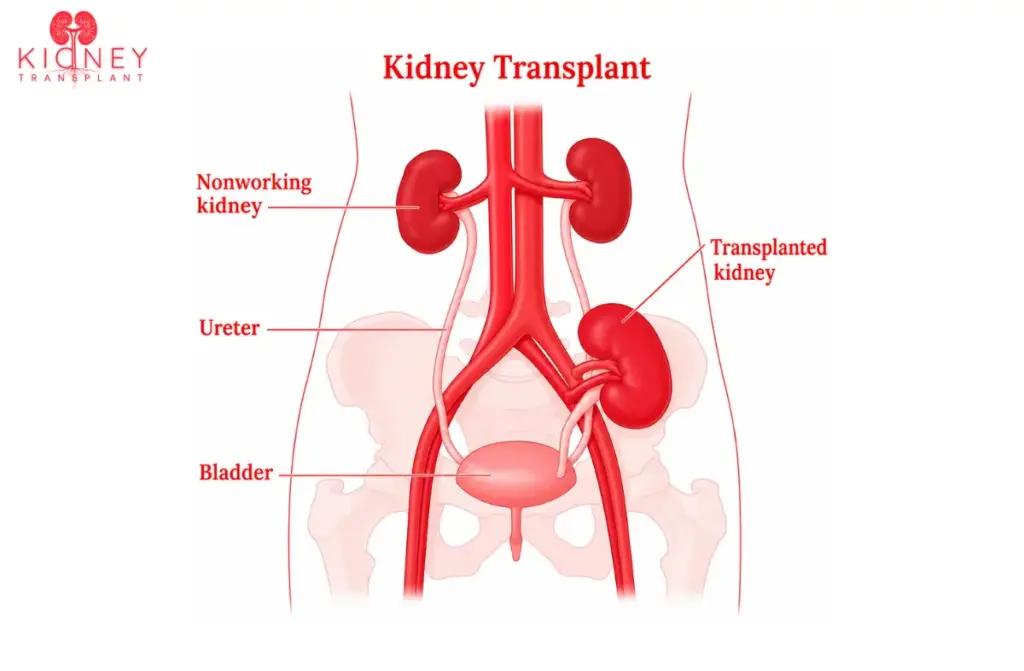
Kidney transplant surgery is a specialised operation in which a healthy kidney from a compatible living or deceased donor is implanted into a person whose kidneys have permanently lost their ability to function. Unlike many organ transplant procedures, surgeons usually leave the patient’s original kidneys in place unless there is a specific medical reason to remove them, such as persistent infection, uncontrolled bleeding, or severe pain. Instead, the donor kidney is positioned in the lower abdomen, where it can be safely connected to the recipient’s major blood vessels and bladder. This surgical approach offers several important advantages. It provides easier access to blood vessels, reduces surgical complexity, shortens operating time, and allows surgeons to monitor the transplanted kidney more effectively after blood flow has been restored. Although the operation generally lasts three to five hours, successful kidney transplant surgery is the result of weeks or months of careful planning, donor matching, compatibility testing, and surgical preparation before the patient ever enters the operating theatre.
Did you Know?
A person can live a healthy life with just one functioning kidney. This is why a single donated kidney is usually sufficient to restore normal kidney function after a successful transplant.
Why is Kidney Transplant Surgery Performed?
Kidney transplant surgery is recommended when the kidneys can no longer perform their essential functions, such as filtering waste products, maintaining fluid balance, and regulating important minerals within the body. This condition is commonly known as end stage kidney disease (ESKD) or kidney failure.
Several medical conditions may eventually lead to the need for transplant surgery, including:
- Advanced Chronic Kidney Disease (CKD)
- Diabetes related kidney damage
- Long standing high blood pressure
- Polycystic Kidney Disease (PKD)
- Glomerulonephritis
- Certain inherited or autoimmune kidney disorders
For eligible patients, transplantation offers one of the most effective surgical solutions for restoring kidney function and improving long term health outcomes.
The Surgical Team Behind a Kidney Transplant
Kidney transplant surgery is one of the few operations where success depends as much on teamwork as it does on surgical expertise. Every professional involved performs a specialised role before, during, and immediately after the operation, ensuring that the donor kidney is protected and the procedure is carried out safely.
| Healthcare Professional | Primary Role During Surgery |
| Transplant Surgeon | Performs the transplant, implants the donor kidney, connects the renal artery, renal vein, and ureter, checks kidney function, and completes the operation. |
| Assistant Surgeons | Assist with tissue handling, blood vessel preparation, haemostasis, and other technically demanding stages of the procedure. |
| Anaesthesiologist | Administers general anaesthesia and continuously monitors heart function, breathing, blood pressure, oxygen levels, temperature, and fluid balance throughout surgery. |
| Scrub Nurse | Prepares sterile instruments, assists the surgeon during every stage of the operation, and maintains the sterile surgical field. |
| Circulating Nurse | Coordinates equipment, manages documentation, and supports the surgical team outside the sterile area to ensure the operation runs efficiently. |
| Organ Preservation Specialist | Preserves the donor kidney in specialised cold storage solution and carefully handles the organ until implantation. |
| Transplant Coordinator | Oversees donor logistics, compatibility testing, laboratory reports, scheduling, documentation, and communication between the donor hospital and transplant centre. |
Expert Insight
A successful kidney transplant is not the work of one surgeon alone. It is the result of seamless coordination between multiple specialists whose combined expertise helps maximise patient safety and transplant success.
Before Kidney Transplant Surgery
Long before the first surgical incision is made, transplant specialists complete a series of carefully planned evaluations to ensure that both the patient and the donor kidney are fully prepared for the procedure. The objective of this stage is simple: minimise surgical risks, confirm donor compatibility, and create the safest possible conditions for a successful transplant.
Comprehensive Medical Evaluation
Every patient undergoes a detailed medical assessment to determine whether kidney transplant surgery can be performed safely and whether any underlying conditions require attention before the operation.
- Blood Tests: Blood investigations determine the patient’s blood group, evaluate kidney and liver function, assess electrolyte balance, and identify any medical conditions that could influence the surgery. These results also establish important baseline values for the transplant team.
- Human Leukocyte Antigen (HLA) Typing: HLA typing compares specific immune system proteins between the donor and recipient. Although an exact match is not always required, closer compatibility generally lowers the likelihood of immune related complications.
- Crossmatch Testing: Crossmatch testing determines whether the recipient has antibodies that may attack the donor kidney immediately after transplantation. A negative crossmatch is one of the most important requirements before surgery can proceed.
- Imaging Studies: Ultrasound scans, CT angiography, and other imaging techniques help surgeons evaluate blood vessel anatomy, pelvic structures, and the optimal location for implanting the donor kidney. Careful pre operative planning reduces unexpected challenges during surgery.
- Heart and Lung Assessment: Because kidney transplant surgery is performed under general anaesthesia, patients undergo cardiac and respiratory evaluations such as an ECG, chest imaging, and additional tests when necessary. These assessments confirm that the patient can safely tolerate a major surgical procedure.
- Infection Screening: Patients are screened for infections including hepatitis, HIV, tuberculosis, urinary tract infections, and other active illnesses. Identifying and treating infections before surgery significantly reduces the risk of postoperative complications.
Finding a Compatible Donor Kidney
Selecting a compatible donor kidney is one of the most important factors influencing the success of kidney transplant surgery.
| Living Donor | Deceased Donor |
| Kidney donated by a healthy living individual. | Kidney donated after consent for organ donation following death. |
| Surgery is usually planned in advance. | Surgery depends on donor organ availability. |
| Often associated with shorter waiting periods. | Waiting times vary depending on compatibility and organ availability. |
| Kidneys frequently begin functioning sooner after transplantation. | Excellent long term outcomes are also achieved with properly matched deceased donor kidneys. |
If a willing donor is incompatible, transplant centres may recommend a paired kidney exchange, allowing multiple donor recipient pairs to exchange kidneys so that each recipient receives a compatible organ.
Surgical Fact
Compatibility involves much more than matching blood groups. Transplant specialists also evaluate tissue compatibility, antibody levels, and overall donor kidney quality before approving surgery.
Preparing for the Operation
Once a suitable donor kidney has been confirmed, the transplant team completes the final preparations before surgery. Patients are admitted to the hospital several hours before the procedure, where nurses perform final health assessments, establish intravenous (IV) access, and review medical records. The anaesthesia team conducts a final evaluation, confirms the anaesthetic plan, and answers any remaining questions. Patients are instructed to avoid eating or drinking for several hours before surgery to minimise anaesthesia related complications. Certain medications, particularly blood thinners and some diabetes medicines, may also be adjusted under medical supervision. Before entering the operating room, the transplant surgeon reviews the surgical plan, confirms donor compatibility, discusses the procedure once more, and obtains informed consent. Every checklist is completed to ensure the operation can proceed safely without unnecessary delays.
Preparation Tip
Thorough preparation before surgery is just as important as the operation itself. Careful evaluation, donor matching, and detailed surgical planning help reduce complications and give the transplanted kidney the best possible opportunity to function successfully.
Inside the Operating Room
Although patients are asleep under general anaesthesia before the procedure begins, the operating room is already functioning with remarkable precision. Every member of the transplant team follows a carefully coordinated plan to ensure that the donor kidney remains healthy and the surgery proceeds safely.
A Strictly Sterile Environment
Kidney transplant surgery is performed under rigorous sterile conditions to minimise the risk of infection. Surgical instruments undergo specialised sterilisation, the operating theatre is carefully prepared, and the patient’s abdomen is disinfected before sterile surgical drapes are applied. Maintaining this sterile environment throughout the operation is essential for protecting both the patient and the transplanted kidney.
Preparing the Donor Kidney
While the patient is being prepared for surgery, the donor kidney is carefully inspected and preserved in a specialised cold preservation solution. Cooling the kidney slows its metabolic activity, helping protect delicate tissues while blood circulation is temporarily absent. Before implantation, the surgical team performs a final inspection to ensure the kidney and its blood vessels remain in excellent condition.
Patient Positioning
The patient is positioned on the operating table to provide surgeons with the safest and most efficient access to the lower abdomen. Special padding is placed beneath pressure points to protect nerves, muscles, and joints throughout the several hour operation. Proper positioning also allows the surgical team to work comfortably while maintaining precise control during delicate stages of the procedure.
Advanced Surgical Monitoring
Throughout the operation, sophisticated monitoring systems continuously track:
- Heart rate
- Blood pressure
- Oxygen saturation
- Respiratory function
- Body temperature
- Fluid balance
These real time measurements allow the anaesthesia team to respond immediately to even minor changes, helping maintain stable conditions for both the patient and the transplanted kidney.
Precision Surgical Instruments
Kidney transplant surgery requires highly specialised instruments designed specifically for delicate vascular procedures. Microsurgical forceps, fine vascular clamps, and precision sutures allow surgeons to connect tiny blood vessels with exceptional accuracy while minimising trauma to surrounding tissues. These instruments play a vital role in restoring healthy blood circulation to the donor kidney.
Why this Matters
Kidney transplant surgery is built on precision. From preserving the donor organ to maintaining a sterile environment and using specialised microsurgical instruments, every detail inside the operating room is designed to maximise the success of the transplant before the first incision is even made.
Kidney Transplant Surgery: Step by Step
Once all pre operative preparations have been completed, the transplant team begins the surgery using a carefully planned sequence of steps. Although every procedure is tailored to the patient’s anatomy and the donor kidney, the overall surgical process follows the same fundamental principles to ensure the kidney is implanted safely and functions effectively.
Step 1: Administration of General Anaesthesia
The surgery begins with the administration of general anaesthesia, ensuring the patient remains unconscious, pain free, and comfortable throughout the procedure. Before the operation starts, the surgical team performs a final safety verification to confirm the patient’s identity, donor information, and surgical plan. Once anaesthesia takes effect, intravenous (IV) lines, a breathing tube, a urinary catheter, and continuous monitoring devices are placed to closely track vital signs during the operation.
Why this Step Matters
Maintaining stable heart function, blood pressure, oxygen levels, and fluid balance throughout surgery helps create the ideal conditions for a successful kidney transplant.
Step 2: Creating the Surgical Access
The transplant surgeon makes an incision in the lower right or left side of the abdomen (iliac fossa), where the donor kidney will be implanted. Unlike many people assume, the patient’s original kidneys are usually left in place unless there is a specific medical reason to remove them. Positioning the donor kidney in the lower abdomen provides easier access to the major blood vessels and bladder while reducing surgical complexity.
Surgical Fact
The transplanted kidney is almost always placed in the lower abdomen rather than replacing the original kidneys because this location offers safer surgical access and simplifies postoperative monitoring.
Step 3: Preparing the Blood Vessels and Implanting the Donor Kidney
The surgeon carefully exposes the recipient’s external iliac artery and vein, which will supply blood to the transplanted kidney. The donor kidney is then removed from its preservation solution, inspected one final time, and positioned within the prepared space in the lower abdomen. Using advanced microsurgical techniques, the surgeon connects the donor’s renal vein and renal artery to the recipient’s blood vessels with exceptional precision.
Why this Step Matters
These vascular connections are the most technically demanding part of kidney transplant surgery. Accurate blood vessel reconstruction is essential for restoring healthy circulation and supporting long term kidney function.
Step 4: Restoring Blood Flow
Once the blood vessel connections are complete, the temporary clamps are removed, allowing blood to circulate through the transplanted kidney for the first time. Within moments, the kidney usually changes from a pale colour to a healthy pink, indicating that oxygen rich blood is flowing through the organ. The surgical team carefully evaluates the kidney’s colour, blood flow, and overall appearance to confirm that it is functioning as expected.
Expert Insight
Restoring blood circulation is often considered the defining moment of kidney transplant surgery, as it provides the first real indication that the transplanted kidney has been successfully connected.
Step 5: Connecting the Ureter to the Bladder
After healthy blood flow has been established, the donor ureter is connected to the recipient’s bladder, allowing urine produced by the transplanted kidney to drain normally. In many cases, a temporary ureteric stent is placed to support healing, reduce the risk of leakage, and maintain urine flow while the connection heals.
Step 6: Final Inspection and Wound Closure
Before completing the operation, the surgeon carefully inspects every surgical connection to confirm adequate blood circulation, secure vessel attachments, proper urine drainage, and the absence of bleeding or leakage. If required, a temporary surgical drain is placed before the incision is closed in layers using sutures or staples, followed by the application of a sterile dressing.
Did you Know?
Many transplanted kidneys begin producing urine during the operation itself. Others particularly kidneys from deceased donors may require additional time before functioning fully, which is also considered a normal postoperative response.
Surgical Techniques Used in Kidney Transplant Surgery
Advances in transplant medicine have introduced different surgical approaches for kidney transplantation. Although open kidney transplant surgery remains the global standard, selected transplant centres now offer robotic assisted techniques for carefully chosen patients.
| Open Kidney Transplant Surgery | Robotic Assisted Kidney Transplant Surgery |
| Most widely performed technique worldwide | Available in selected specialised centres |
| Single lower abdominal incision | Multiple small incisions with robotic assistance |
| Extensive long term clinical experience | Enhanced precision through robotic instruments |
| Suitable for the majority of patients | Best suited for selected cases based on patient and surgeon factors |
| Standard approach in most transplant hospitals | Requires specialised equipment and advanced surgical expertise |
Both approaches aim to achieve the same objective: A safe transplant with excellent long term kidney function.
What Determines the Complexity of Kidney Transplant Surgery?
Although the surgical steps remain largely the same, several factors can influence the complexity and duration of the operation.
These include:
- Previous abdominal surgeries resulting in scar tissue
- Variations in blood vessel anatomy
- Multiple renal arteries in the donor kidney
- Obesity or challenging body anatomy
- Previous kidney transplants
- Unexpected bleeding during surgery
- Anatomical differences requiring vascular reconstruction
Experienced transplant surgeons evaluate these factors carefully before surgery and adapt their surgical approach whenever necessary.
Possible Surgical Risks and How Surgeons Minimise Them
Like all major operations, kidney transplant surgery carries certain risks. Fortunately, advances in surgical techniques, strict operating room protocols, and continuous monitoring have significantly reduced the likelihood of serious complications. Throughout the procedure, the transplant team takes multiple precautions to minimise these risks and ensure patient safety.
- Bleeding: Some blood loss is expected during any major surgery, but transplant surgeons use meticulous surgical techniques, precise blood vessel control, and advanced suturing methods to minimise bleeding throughout the procedure.
- Infection: Maintaining a sterile operating environment is a top priority. Strict infection control protocols, specialised operating theatres, and preventive antibiotics help reduce the risk of surgical site infections.
- Blood Clots: Blood vessels supplying the transplanted kidney are connected with exceptional precision to maintain smooth blood flow. Surgeons carefully inspect these connections before completing the operation to minimise the risk of clot formation.
- Urine Leakage: After the ureter is connected to the bladder, surgeons verify that the connection is secure. In many cases, a temporary ureteric stent is placed to support healing and reduce the chances of urine leakage.
- Blood Vessel Narrowing: The surgeon thoroughly evaluates the newly connected artery and vein to ensure they remain open and unobstructed, allowing adequate blood circulation to the transplanted kidney.
- Anaesthesia Related Complications: Throughout the surgery, the anaesthesiology team continuously monitors heart rate, blood pressure, oxygen levels, breathing, and fluid balance, enabling immediate intervention if any changes occur.
Surgical Fact
Modern kidney transplant surgery achieves excellent success rates because every stage of the procedure follows carefully standardised protocols refined through decades of surgical innovation, clinical research, and multidisciplinary expertise.
Conclusion
Kidney transplant surgery represents one of the greatest achievements in modern surgical medicine. While the operation itself lasts only a few hours, its success depends on meticulous planning, advanced microsurgical techniques, precise coordination, and the expertise of a multidisciplinary transplant team. From preparing the donor kidney and establishing delicate vascular connections to restoring blood circulation and confirming healthy organ function, every stage is performed with extraordinary precision. Understanding these surgical steps not only helps patients feel more informed but also highlights the remarkable science and teamwork behind every successful transplant. Ultimately, kidney transplant surgery is far more than a complex medical procedure—it is a carefully orchestrated operation designed to give a healthy donor kidney the best possible opportunity to restore life sustaining function and transform the future of patients living with kidney failure.
Read More: Life After Kidney Transplant