A kidney transplant is one of the most successful treatments for end stage kidney disease, offering patients the chance to regain strength, independence, and a significantly improved quality of life. For many, it marks a turning point moving away from dialysis dependence toward a more stable and active life. But what is often less understood is that transplant success does not end in the operating room. In fact, surgery is only the beginning of a long medical journey where careful monitoring, medication adherence, and awareness of complications play a crucial role. Kidney transplant complications can occur at different stages immediately after surgery, during the first few months, or even years later. Some are mild and temporary, while others may require urgent medical attention. The important reassurance is that with modern transplant medicine, regular follow up, and early detection, most complications are manageable and many can be prevented. This article explains kidney transplant complications in a clear, practical way what they are, why they happen, how they are detected, and what patients can do to protect their transplanted kidney for the long term.
Why Complications Can Occur After a Kidney Transplant
To understand complications, it is important to understand what the body experiences after a transplant. A kidney transplant introduces a healthy kidney from a donor into a body whose immune system is naturally designed to detect and reject anything it sees as “foreign.” To prevent this, patients must take lifelong immunosuppressive medications. These drugs protect the kidney but also reduce the body’s ability to fight infections. At the same time, the surgery itself involves connecting blood vessels and urinary structures under delicate conditions, and the body needs time to adjust to the new organ. Because of this balance between immune suppression, surgical healing, and underlying health conditions like diabetes or hypertension, complications may arise.
However, it is important to emphasize: complications are not the rule they are risks that are actively monitored and managed in modern transplant care.
Early Phase: What Happens in the First Days and Weeks
- The earliest stage after transplant is the most closely monitored period, usually in the hospital. Here, doctors ensure that the kidney starts functioning properly and that the body is stabilizing.
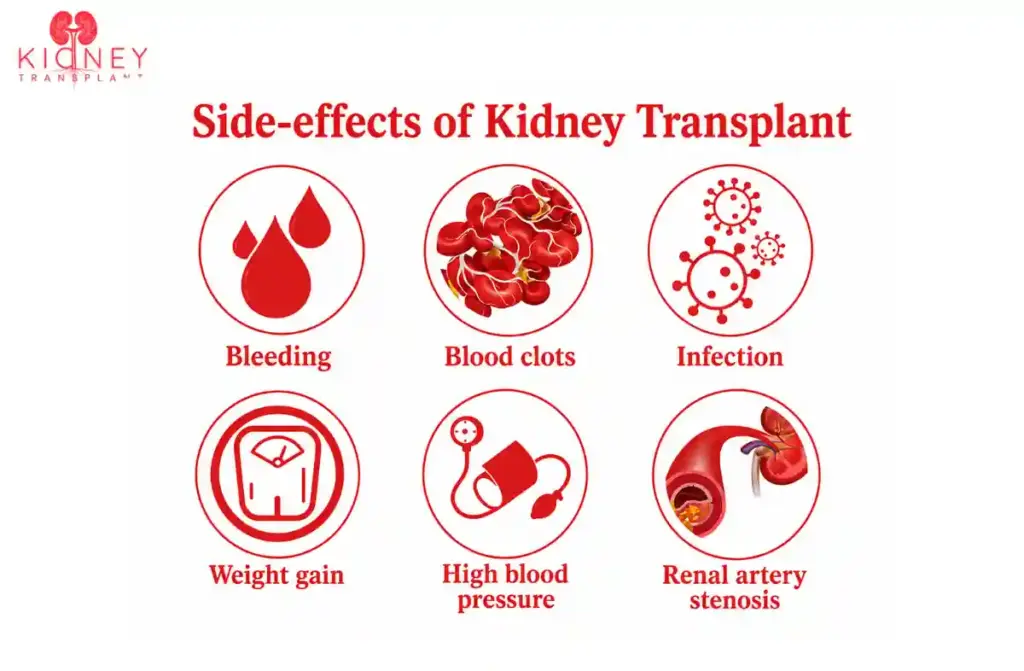
- Some complications during this phase are related to surgery itself. For example, minor bleeding can occur at the surgical site due to blood vessel connections, but this is typically controlled immediately. In some cases, blood flow to the kidney may be temporarily affected by clots, which are detected early through imaging and treated promptly.
- Another possible issue is urine leakage or narrowing at the connection between the kidney and bladder. These conditions may sound serious, but they are often corrected using a stent or minor surgical procedures without long term consequences.
- A particularly important early concern is delayed graft function, where the kidney does not start working immediately. In such cases, temporary dialysis may be required until the kidney stabilizes. This does not necessarily indicate failure of the transplant and often improves over time.
- During this same period, infection risk is higher because of immunosuppressive medication. Even common infections like urinary tract infections or mild lung infections must be treated carefully. Fever, fatigue, or burning urination are closely monitored symptoms in this stage.
The Immune Challenge: Understanding Rejection
- One of the most important complications after kidney transplant is rejection. This occurs when the immune system recognizes the new kidney as foreign and attempts to attack it.
- Rejection is classified into three types, each differing in timing and severity.
- The most immediate form, hyperacute rejection, occurs within minutes or hours of transplant and is extremely rare today due to improved donor matching and screening.
- Acute rejection typically occurs within the first few months. This is the most clinically significant type but is also the most treatable. Patients may experience reduced urine output, fever, swelling, or rising creatinine levels. When detected early, it is often reversible with adjustments in immunosuppressive therapy or steroid treatment.
- Chronic rejection develops slowly over years. It does not usually present sudden symptoms but may show a gradual decline in kidney function. It remains one of the long term challenges in transplant medicine, but its progression can often be slowed with careful management.
- Rejection highlights an important principle in transplant care: early detection saves kidney function.
Infections and Medication Effects: The Hidden Balance
- Immunosuppressive medications are essential for transplant success, but they create a delicate balance by lowering immune defenses. This increases susceptibility to infections, especially in the early months.
- Urinary tract infections, lung infections, and viral infections such as CMV or BK virus are among the most commonly observed. Symptoms may include fever, fatigue, cough, or changes in urination.
- Most infections are treatable when identified early, but they can become serious if ignored. This is why regular monitoring and prompt reporting of symptoms are essential.
- At the same time, these medications may have long term effects on the body. Some patients may develop high blood sugar levels, leading to post transplant diabetes. Others may experience increased blood pressure, elevated cholesterol, or mild effects on kidney tissue over time. Bone thinning or tremors may also occur depending on medication dosage and duration.
- Despite these effects, immunosuppressive drugs remain absolutely essential. The goal is not to stop them, but to carefully adjust them to balance protection and safety.
Long Term Complications: What Can Develop Over Years
- As time passes after transplant, complications if they occur tend to develop slowly and often silently. This is why long term follow up is just as important as early recovery care.
- One possible change is gradual decline in kidney function, which may occur due to aging of the transplant kidney, medication effects, or chronic immune activity. In some cases, small amounts of protein may appear in urine, signaling early kidney stress.
- High blood pressure is another common long term issue. It can result from medications, kidney changes, or lifestyle factors, and if uncontrolled, it may affect both heart and kidney health.
- Cardiovascular disease becomes an important consideration over time. Patients with kidney transplants have a higher risk of heart related conditions compared to the general population, making diet, exercise, and medication control essential.
- Another long term consideration is post transplant diabetes, which may develop due to steroid use and metabolic changes. With proper monitoring, it can usually be managed effectively.
- There is also a slightly increased risk of certain cancers, especially skin cancers and lymphomas, due to reduced immune surveillance. Regular screening and sun protection significantly reduce this risk.
Return of Original Kidney Disease
In some cases, the kidney disease that originally caused failure may return in the transplanted kidney. This depends on the type of disease. Conditions like IgA nephropathy, FSGS, or lupus related kidney disease may recur in some patients. However, recurrence does not always mean transplant failure. Many cases progress slowly and can be managed effectively with early treatment and monitoring.
Warning Signs That Require Immediate Attention
Certain symptoms should always be taken seriously after a kidney transplant. These include:
A sudden drop in urine output, persistent fever, swelling of the body, pain over the transplant area, blood in urine, or unexplained weight gain. These signs may indicate infection, rejection, or fluid imbalance. Early reporting is critical because timely treatment can often prevent permanent damage.
How Complications are Detected Early
One of the strongest advantages of modern transplant medicine is routine monitoring. Doctors rely on blood tests such as creatinine and urea levels, urine analysis, ultrasound scans, Doppler imaging, and medication level checks. In some cases, a kidney biopsy may be required to understand unexplained changes in kidney function. Often, these tests detect problems before any symptoms appear, allowing early intervention.
Managing and Preventing Complications
- While complications can occur, many of them can be prevented or minimized through consistent care.
- The most important factor is strict adherence to prescribed medications. Missing doses significantly increases the risk of rejection.
- Regular follow up visits allow doctors to detect changes early. A healthy lifestyle balanced diet, controlled salt intake, proper hydration, regular exercise, and avoidance of smoking or alcohol also plays a major role in long term success.
- Infection prevention, including hygiene practices and vaccinations, further reduces risks.
- Ultimately, long term transplant success depends on consistency rather than complexity.
Living Well After a Kidney Transplant
- Despite the potential risks, most kidney transplant recipients go on to live full, active, and meaningful lives.
- They return to work, travel safely, maintain family lives, and participate in normal daily activities. The key difference is not limitation it is awareness.
- A transplant does not restrict life; it reshapes it into one that requires care, discipline, and medical partnership.
Conclusion
Kidney transplant complications are an important part of understanding life after surgery, but they should never overshadow the benefits of transplantation. Modern medicine has made it possible to detect complications early, treat them effectively, and prevent many of them entirely. With proper medication adherence, regular follow up, and a healthy lifestyle, most patients maintain strong kidney function for many years. A kidney transplant is not just a medical procedure it is a long term commitment between the patient, the kidney, and the healthcare team. When managed carefully, it offers not just survival, but a renewed and meaningful quality of life.
Read More: Kidney Transplant Life Expectancy