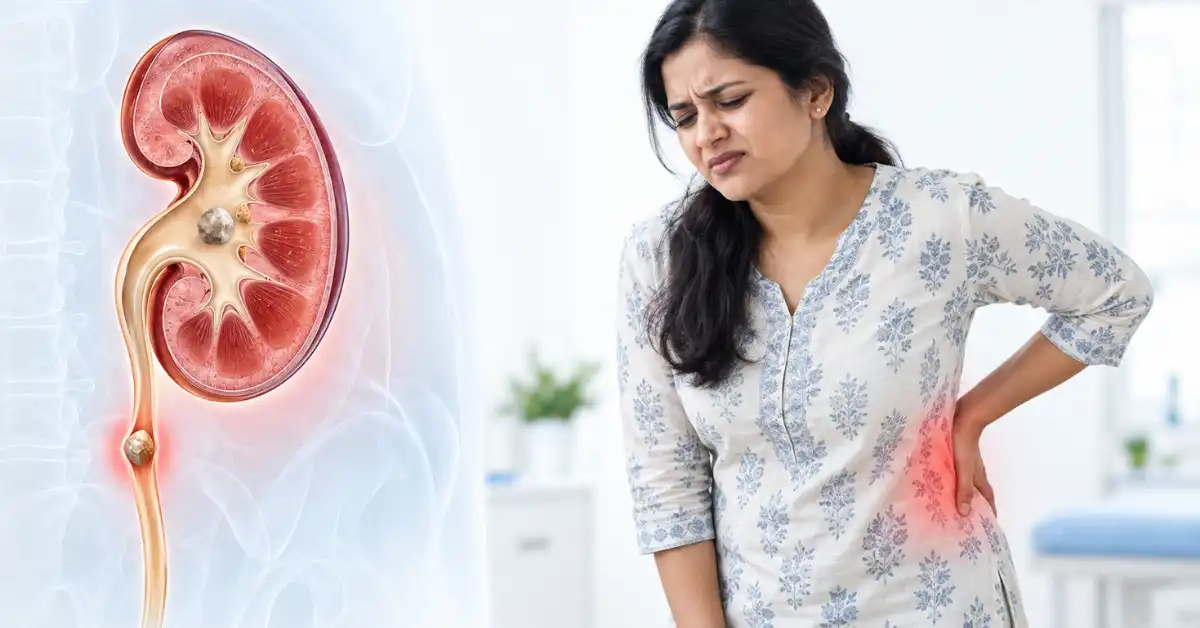
Kidney stone pain can be intense and difficult to ignore. Unlike ordinary aches that may improve with rest, a kidney stone can cause sudden, severe pain in the back or side that comes in waves and may radiate toward the lower abdomen or groin. The pain can change as the stone moves through the urinary tract, sometimes accompanied by nausea, vomiting, or urinary symptoms.
Understanding How to Get Rid of Kidney Stone Pain safely—and knowing when medical treatment is necessary—is important. While some small kidney stones pass on their own, others may require medication or a medical procedure. This guide explains practical ways to relieve kidney stone pain, support the stone’s passage, and recognize warning signs that require prompt medical attention.

How to Get Rid of Kidney Stone Pain and get the pain under control?
The most effective way to control kidney stone pain is usually appropriate pain medication recommended by a healthcare professional, along with supportive measures while a suitable stone passes.
Depending on your health and the severity of the episode, treatment may include:
- Pain-relieving medicines: NSAIDs are commonly used for renal colic when they are medically appropriate. They are not suitable for everyone, so check with a healthcare professional or pharmacist before using them.
- Prescription treatment: Severe pain that cannot be adequately controlled may require medical assessment and stronger treatment.
- Adequate fluid intake: Drink fluids regularly unless your doctor has advised you to restrict them. Drinking excessive amounts of water at once does not force a blocked stone through the ureter.
- Gentle heat: A warm bath or heating pad may provide temporary comfort.
- Medical assessment: Severe or persistent pain, vomiting, fever, chills, or difficulty passing urine should not be managed by simply waiting at home.
The key point is that getting rid of kidney stone pain safely does not necessarily mean getting rid of the kidney stone immediately. Pain control and treatment of the underlying stone are related but separate goals.
Why Does a Kidney Stone Hurt So Much?
The stone itself is not necessarily what creates the extreme pain. The problem begins when the stone moves from the kidney into the ureter, the narrow tube that carries urine toward the bladder.
If the stone becomes lodged, urine may begin to accumulate behind it. The ureter also contracts repeatedly in an attempt to move the stone forward. The resulting pressure, stretching, and muscular spasms produce the severe waves of pain known as renal colic.This is why kidney stone pain can feel so intense—and why it often comes and goes rather than remaining constant.
You may notice:
- Severe pain in the side or lower back, often appearing suddenly.
- Pain that comes in waves, becoming intense and then easing before returning.
- Pain that moves toward the lower abdomen or groin as the stone travels downward.
- Nausea or vomiting, particularly during severe attacks.
- Blood in the urine, because the stone can irritate the urinary tract lining.
- Restlessness, with difficulty finding a comfortable position.
The location of the pain can change as the stone moves. That can actually be useful information because the symptoms may reflect the stone’s changing position within the urinary tract.
What Can Help Kidney Stone Pain at Home?
If you have already been assessed and your doctor has confirmed that the stone is suitable for natural passage, several measures can help you stay more comfortable while the body does the work.
1. Use Appropriate Pain Relief
Pain medicine is often the most effective way to control kidney stone pain. NSAIDs are commonly used for renal colic when they are medically appropriate because they can reduce both pain and inflammation.
However, they are not suitable for everyone, particularly people with certain kidney problems, stomach ulcers, bleeding risks, or medication interactions. Take prescribed or over-the-counter pain medicine only as directed.If severe pain remains uncontrolled despite appropriate medication, seek medical care rather than taking extra doses.
2. Stay Hydrated—But Don’t Force Water
Adequate hydration helps maintain urine flow, but drinking large amounts of water quickly will not force a stone through the ureter. If the stone is causing significant obstruction, excessive fluid may increase pressure and discomfort.
Instead, drink fluids regularly unless you have been advised to restrict them because of another medical condition. Hydration supports stone passage; it does not physically flush out an obstructing stone.
3. Try Gentle Heat
A warm bath or heating pad may provide temporary relief by helping relax tense muscles and making the pain easier to tolerate.
Keep the temperature comfortable and avoid prolonged exposure. Heat can ease the discomfort, but it does not dissolve or remove the stone.
4. Find a Comfortable Position
There is no single position that makes a kidney stone pass faster. Some people feel better lying down, while others prefer sitting upright, standing, or walking gently. During a severe attack, comfort matters more than forcing movement.
If the pain is intense, focus on appropriate pain relief and medical assessment rather than trying to exercise the stone out.
Can Walking Help Pass a Kidney Stone?
Gentle walking may be reasonable if you feel comfortable, but it should not be considered a guaranteed way to force a stone through the urinary tract. Some people find that light movement helps them cope with discomfort. Others feel worse when they move during an acute attack.
The important distinction is that walking may help you feel better, but it does not replace medical treatment when a stone is obstructing the urinary tract. If your pain is severe enough that you cannot walk normally, focus on pain control and medical assessment rather than trying to “shake” the stone loose.
What Should You Avoid During a Kidney Stone Attack?
When people are desperate for relief, it is easy to try remedies found online. Unfortunately, some popular approaches can be unhelpful or even risky.
Don’t force excessive water
Drinking huge quantities of water in a short period will not necessarily push the stone through a blocked ureter. It can increase discomfort when urine drainage is already impaired.
Don’t repeatedly exceed the recommended painkiller dose
If the pain remains severe despite appropriate medication, taking more and more tablets is not a safe solution. Some pain medicines can cause serious kidney, stomach, liver, or bleeding complications when taken incorrectly.
Don’t rely on “kidney flushes” or detox drinks
There is no proven drink that can instantly dissolve or flush out every type of kidney stone. Some herbal products and supplements may also interact with medications or potentially harm the kidneys.
Don’t assume severe pain means you simply need to wait
Pain is an important symptom, but the bigger question is whether the stone is causing obstruction, infection, or another complication.
If something about the episode feels different from your usual symptoms, medical assessment is safer than guessing.
When Does Kidney Stone Pain Become an Emergency?
This is one of the most important things to understand. Severe kidney stone pain accompanied by fever or infection symptoms requires urgent medical attention.
An obstructing stone can prevent infected urine from draining normally. This combination can become dangerous quickly and may require urgent drainage of the urinary system before the stone itself is definitively treated.
Seek urgent medical care if you develop:
- Fever or chills, particularly alongside flank pain or urinary symptoms.
- Persistent vomiting that prevents you from keeping fluids or medicines down.
- Difficulty passing urine or very little urine, especially if this is new.
- Severe pain that remains uncontrolled despite appropriate medication.
- Increasing weakness, confusion, faintness, or feeling seriously unwell.
- Known kidney disease with a new severe stone episode, because reduced kidney reserve can change the level of risk.
- A single functioning kidney with suspected obstruction, which requires particularly prompt assessment.
When Does Pain Mean the Stone May Need to Be Removed?
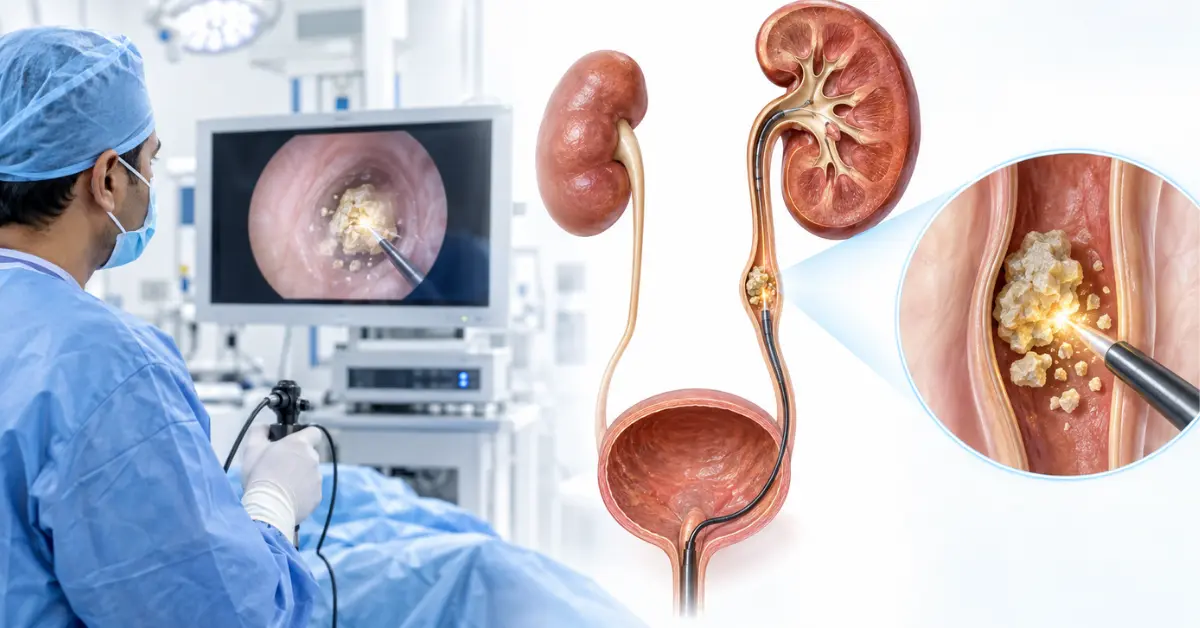
Not every painful stone needs a procedure. Many smaller stones can pass naturally. However, intervention may become necessary when the stone is unlikely to pass, remains stuck, causes persistent obstruction, or continues producing significant symptoms.
Doctors may consider procedures such as:
| Treatment | What It Does |
| Ureteroscopy | A thin scope is passed through the urinary tract to locate and remove or break the stone. |
| Shock Wave Lithotripsy (SWL/ESWL) | Uses focused shock waves to break selected stones into smaller fragments. |
| Percutaneous Nephrolithotomy (PCNL) | Removes larger or complex kidney stones through a small access point in the back. |
| Ureteral stent | Helps restore urine drainage when the ureter is blocked or needs support. |
The choice depends on the stone’s size, location, composition, obstruction, symptoms, kidney function, and overall health.Sometimes the immediate priority is not removing the stone itself but restoring urine drainage, particularly when infection is present.
What Happens After the Pain Goes Away?
Once the stone has passed, the immediate focus is recovery—but there is another question worth asking:
Why did the stone form in the first place?
A person can successfully pass one stone and then develop another months or years later.
Depending on your history, your doctor may recommend:
- Stone analysis if you were able to collect the stone.
- Blood tests to look for metabolic risk factors.
- Urine testing to assess substances such as calcium, oxalate, uric acid, citrate, and other factors.
- Dietary adjustments based on your specific stone type.
- A personalised hydration plan.
- Further imaging if there is uncertainty about whether the stone has completely passed.
This turns treatment from simply ending today’s painful episode into preventing the next one.
Conclusion
Kidney stone pain can be frightening because it often arrives suddenly and feels far more intense than people expect. The immediate goal is to control the pain safely while allowing a suitable stone to pass naturally. Appropriate medication, adequate hydration, gentle heat, and rest can make the process more manageable.
But pain relief should never become a reason to ignore warning signs. If you develop fever, chills, persistent vomiting, difficulty passing urine, uncontrolled pain, or feel increasingly unwell, seek medical attention promptly.
And once the episode is over, don’t stop at simply getting rid of the pain. Understanding the stone’s size, location, composition, and underlying cause can help reduce the chance of experiencing the same painful journey again.
Read More: Foods to Avoid With Kidney Disease