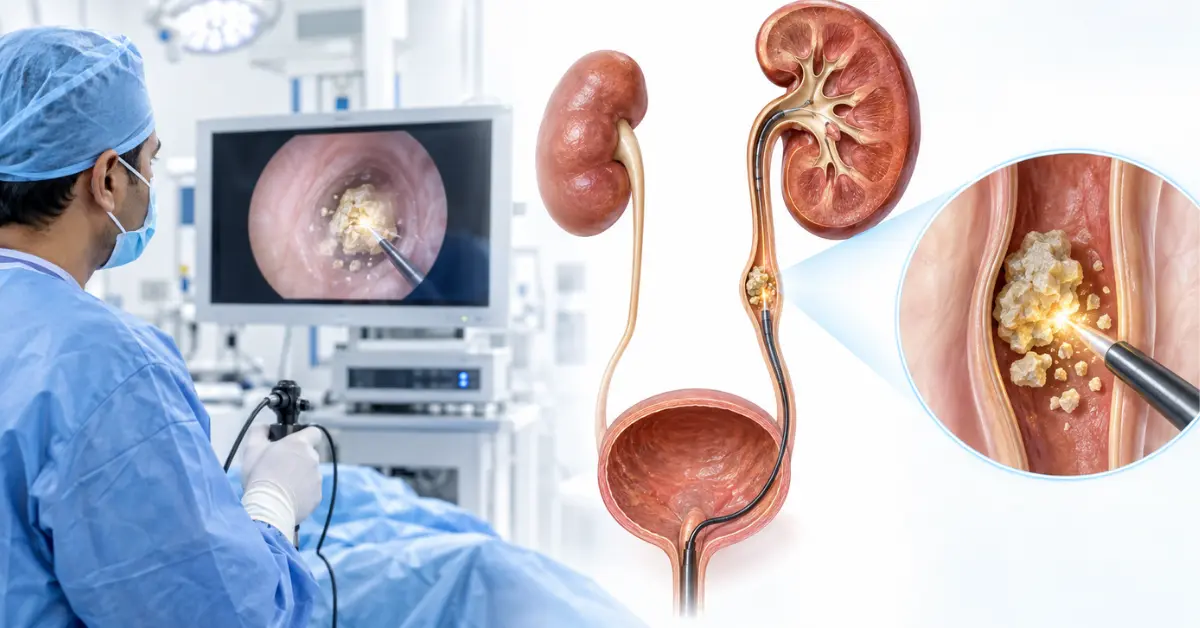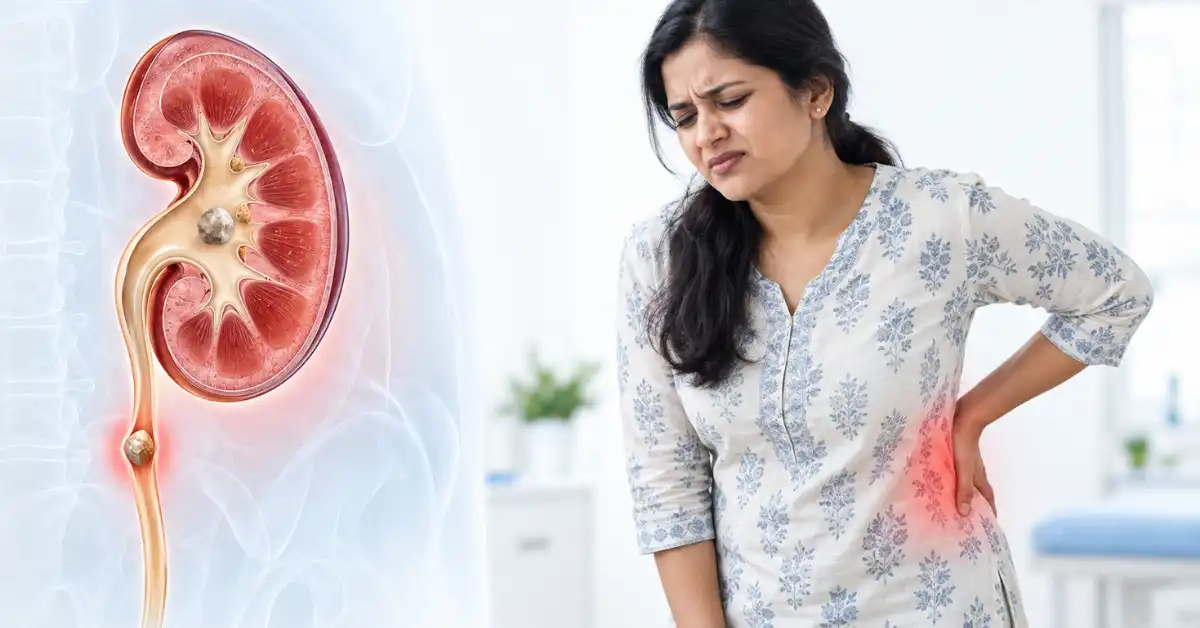
Passing a kidney stone rarely feels like a single event. Instead, it unfolds in Stages of Passing a Kidney Stone, each bringing its own sensations and challenges. A stone may form quietly inside the kidney, sometimes going unnoticed for weeks or even months before it starts to move.
Once it begins its journey, the stone travels through the ureter, into the bladder, and eventually out of the body through urination. Along the way, the pain, pressure, and other symptoms can shift dramatically from one stage to the next. Understanding what happens at each stage can help you recognize what your body is experiencing and know when it’s time to seek medical care.
What Happens When a Kidney Stone Passes?
A kidney stone generally passes through five stages: it forms inside the kidney, enters the ureter, travels toward the bladder, reaches the bladder, and finally leaves the body through the urethra.
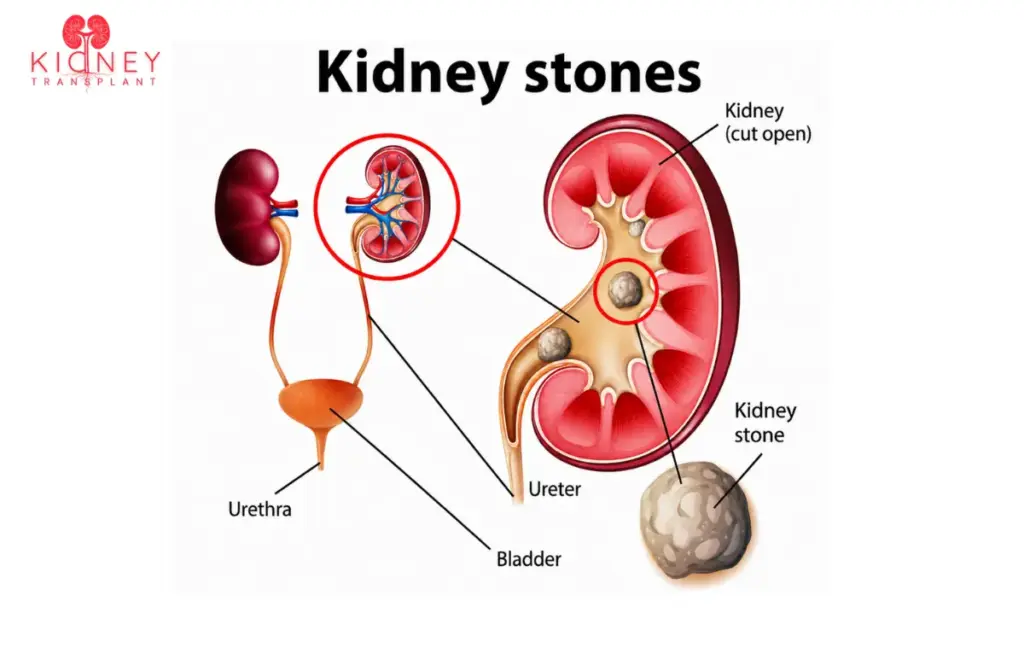
| Stage | What Happens | What You May Notice |
| 1. Formation | Minerals gradually form a stone inside the kidney. | Usually nothing |
| 2. Leaving the kidney | The stone enters the ureter. | Sudden flank or back pain, nausea, blood in urine |
| 3. Travelling through the ureter | The stone moves through the narrow urinary passage. | Severe wave-like pain, pain moving toward the groin |
| 4. Reaching the bladder | The stone leaves the ureter and enters the bladder. | Flank pain often improves; urinary urgency may increase |
| 5. Passing out | The stone leaves the bladder through the urethra. | Mild discomfort or sometimes no noticeable symptoms |
Before the Pain Begins: How Does a Kidney Stone Form?
- Urine naturally carries minerals and other waste products that are meant to stay dissolved and pass out of the body without issue.
- But when urine becomes too concentrated, or its chemical balance shifts, tiny crystals can start to form.
- Over time, these crystals may cluster together and slowly grow into a kidney stone.
- This process can take weeks, months, or even years — often without producing a single symptom. You may go about your daily life with no idea a stone is forming.
- That’s why kidney stone pain tends to feel so sudden and unexpected. In most cases, the stone itself isn’t new. What’s new is that it’s finally started to move.
What happens during stone formation?
- Minerals become concentrated in the urine. Dehydration, certain dietary patterns, metabolic conditions, and other factors can increase the concentration of stone-forming substances.
- Tiny crystals begin to develop. At this point, they are generally far too small to interfere with urine flow or cause pain.
- The crystals gradually grow. As more material collects, a solid stone develops inside the kidney.
- The stone may remain quiet for a long time. Some stones are discovered accidentally during an ultrasound or CT scan performed for an unrelated reason.
So if your first symptom is sudden severe pain, it does not necessarily mean the stone suddenly formed that morning.
Stage 1 – The Kidney Stone Is Sitting Inside the Kidney
- This is usually the silent stage.The kidney has a collecting system that allows urine to drain toward the ureter. A stone sitting within the kidney may not interfere with that process, particularly when it is small and not blocking an important drainage pathway.
- That is why some people can have a kidney stone for months without experiencing a single symptom.You might even discover it during an imaging test for something completely unrelated.
- The situation often changes when the stone begins moving. And that brings us to the stage most patients remember.
Stage 2 – The Stone Leaves the Kidney and the Pain Begins
When a stone enters the ureter, the experience can change very quickly. The ureter is a narrow muscular tube that carries urine from the kidney to the bladder. It is designed to move liquid—not a solid stone.
As the stone moves through this narrow passage, it may irritate the lining or partially obstruct the flow of urine. The ureter responds by contracting around it, trying to push the stone forward. This is when renal colic, the classic pain of a kidney stone, often begins.
You may experience:
- Sudden pain in the flank or back: It often begins below the ribs and may become intense within a short period.
- Pain that comes in waves: The ureter repeatedly contracts and relaxes, so the pain may build, ease, and then return.
- Nausea or vomiting: Severe pain can activate nerve pathways that also affect the digestive system.
- Blood in the urine: The moving stone can irritate the delicate lining of the urinary tract.
You may also feel unusually restless. Many people with renal colic keep changing position because lying down, sitting, or standing does not seem to make the pain disappear.
Why can such a small stone cause so much pain?
- The pain is not simply caused by the size of the stone. A small stone lodged in a narrow section of the ureter can create considerable pressure and trigger strong muscular contractions.
- Meanwhile, a much larger stone sitting quietly inside the kidney may cause little or no pain. So pain severity should never be used to estimate stone size.
Stage 3 – The Stone Moves Through the Ureter
This is often the hardest part of the journey. Once inside the ureter, the stone has to travel through a narrow, muscular passage before it can reach the bladder. Sometimes it moves steadily. Sometimes it pauses. It may shift slightly, become temporarily lodged, and then continue again.
That stop-and-start movement is one reason kidney stone pain can feel so unpredictable. You may have an intense episode, feel better for a while, and then suddenly experience another wave.
Why does the pain move?
As the stone travels downward, the pain often changes location. It may begin in the flank or lower back and gradually move toward the lower abdomen, pelvis, or groin. This can be alarming, especially if you are not expecting it.
But in many cases, the changing location reflects the changing location of the stone.
- The stone moves lower in the ureter, so the pain may gradually move from the back toward the abdomen and groin.
- The ureter continues contracting around the stone, producing repeated waves of pain rather than one constant sensation.
- The lining becomes irritated, which may cause blood to appear in the urine.
- The body’s pain pathways are activated, which can lead to nausea, sweating, vomiting, and restlessness.
Stage 4 – The Stone Reaches the Bladder
This is the stage that often leaves patients confused. After hours of severe flank pain, you may suddenly feel dramatically better.
Instead of back pain, you may now notice symptoms such as:
- A sudden urge to urinate, because the stone can irritate the bladder.
- Frequent trips to the bathroom, sometimes with only a small amount of urine being passed.
- Mild burning during urination, particularly as the stone approaches the bladder outlet.
- Pressure or discomfort low in the abdomen or pelvis, replacing the pain you previously felt in the side or back.
This change in symptoms can actually provide a useful clue about the stone’s progress.
Stage 5 – The Stone Finally Leaves the Body
The final step is when the stone passes from the bladder through the urethra during urination.
For a small stone, this may happen with surprisingly little discomfort. Some people notice a brief stinging sensation. Others see the stone in the urine. Some never realise exactly when it passed.
Once the stone is out, the urinary tract gradually settles.
- The severe pain usually resolves, because the obstruction has been removed.
- Blood in the urine should gradually clear as the irritated lining heals.
- Urinary urgency and frequency usually settle, particularly if they were caused by bladder irritation.
- Normal activity can gradually resume once symptoms have completely settled.
How Long Does It Take to Pass a Kidney Stone?
This is one of the first questions patients usually ask—and unfortunately, there is no single answer.
Some small stones pass within a few days. Others may take several weeks. A stone may move quickly for part of the journey and then remain in one position for a while.
The timeline depends on factors such as:
- Stone size: Smaller stones generally have a better chance of passing naturally.
- Stone location: A stone that has already reached the lower ureter has less distance to travel than one that is still near the kidney.
- Stone shape: Smooth stones may move more easily than irregular ones.
- Urinary obstruction: A stone that significantly blocks urine flow requires closer attention.
- Your overall condition: Infection, kidney function, persistent vomiting, and uncontrolled pain can all change the treatment decision.
| Stage | What Usually Happens |
| Formation | Develops silently over weeks, months, or longer |
| Entry into ureter | Symptoms may begin suddenly |
| Ureter journey | May last hours to several weeks |
| Bladder stage | Often relatively brief |
| Final passage | Occurs during urination |
What Can Help a Kidney Stone Pass Naturally?
If imaging shows that a stone is small enough and safe to pass naturally, treatment usually focuses on helping you get through the process comfortably while watching for complications.
- Stay adequately hydrated: Drink enough fluid to maintain normal urine production, but do not force huge amounts of water in the hope of physically pushing the stone out. Excessive fluid during an obstruction can sometimes make discomfort worse.
- Use pain medication as prescribed: Appropriate pain control can make the passage much more manageable. Avoid taking painkillers repeatedly on your own without medical guidance, particularly if you have kidney disease or other health conditions.
- Take prescribed medicines that may assist passage when appropriate: Certain medications can relax the ureter and may improve the chance of passage for selected stones.
- Continue gentle movement if you feel comfortable: Walking and normal activity may be reasonable, but there is no need to force strenuous exercise while you are in significant pain.
When Does a Kidney Stone Need Treatment?
Not every stone should be left to pass naturally. Your doctor may recommend active treatment if:
- The stone is too large or poorly positioned to pass safely: Imaging can help determine whether natural passage is realistic.
- Severe pain continues despite appropriate medication: Persistent uncontrolled pain may indicate that the stone is not progressing or that obstruction remains significant.
- Urine flow is seriously obstructed: Prolonged blockage can put pressure on the kidney and eventually affect kidney function.
- There is an infection behind the obstruction: This is particularly serious. An infected, blocked urinary system can become life-threatening and requires urgent treatment.
- Kidney function is deteriorating: A decline in kidney function may make intervention safer than continued observation.
When Should You Seek Urgent Medical Attention?
Kidney stone pain can be severe, but some symptoms should not be treated as “just part of passing a stone.”
Seek urgent medical attention if you develop:
- Fever, chills, or feeling suddenly unwell, particularly when you already know you have an obstructing stone.
- Difficulty passing urine or inability to urinate, which may indicate significant urinary obstruction.
- Severe pain that remains uncontrolled despite prescribed medication, especially if it is accompanied by repeated vomiting.
- Persistent vomiting or inability to keep fluids down, which can lead to dehydration and make the situation harder to manage safely.
- Significant or persistent blood in the urine, especially when accompanied by weakness, dizziness, or worsening symptoms.
Conclusion
A kidney stone may pass, but the story should not end there. The pain and discomfort may disappear, yet the underlying reason the stone formed can remain. Understanding your hydration, diet, medications, family history, and other risk factors can help identify what contributed to stone formation.
A medical evaluation, especially after a first or recurrent stone, can provide valuable guidance for prevention. Passing the stone solves the immediate problem; preventing another stone protects your future health. So, when the pain is finally gone, don’t simply move on.
Read More: How to Prevent Kidney Failure