There are many medication options for managing kidney disease, and your doctor usually picks a combination based on your specific condition.
ACE Inhibitors
ACE inhibitors relax blood vessels and lower blood pressure, which reduces pressure inside the kidneys.
- How they work: They block a hormone called angiotensin that narrows blood vessels.
- Common examples: Ramipril, Enalapril, and Lisinopril.
- Benefits: Slows kidney damage and reduces protein leakage in urine.
- Possible side effects: Dry cough, dizziness, and higher potassium levels.
Angiotensin II Receptor Blockers (ARBs)
ARBs work similarly to ACE inhibitors but are often given to people who cannot tolerate the cough side effect.
- Uses: Control blood pressure and protect kidney filters.
- Benefits: Reduces protein in urine and slows CKD progression.
- Side effects: Dizziness, fatigue, and elevated potassium.
SGLT2 Inhibitors
This newer class of kidney disease medicines has become a game changer for people with diabetes related kidney damage.
- Kidney protection: Reduces pressure inside kidney filters and slows scarring.
- Diabetes management: Lowers blood sugar by removing excess glucose through urine.
- Benefits: Cuts down risk of kidney failure and heart related complications.
Finer none (Mineralocorticoid Receptor Antagonist)
Finer none is a relatively newer addition among medicines for kidney disease, especially for diabetic kidney patients.
- Who can benefit: People with type 2 diabetes and chronic kidney disease.
- How it protects the kidneys: Reduces inflammation and scarring inside kidney tissue, lowering the risk of kidney failure.
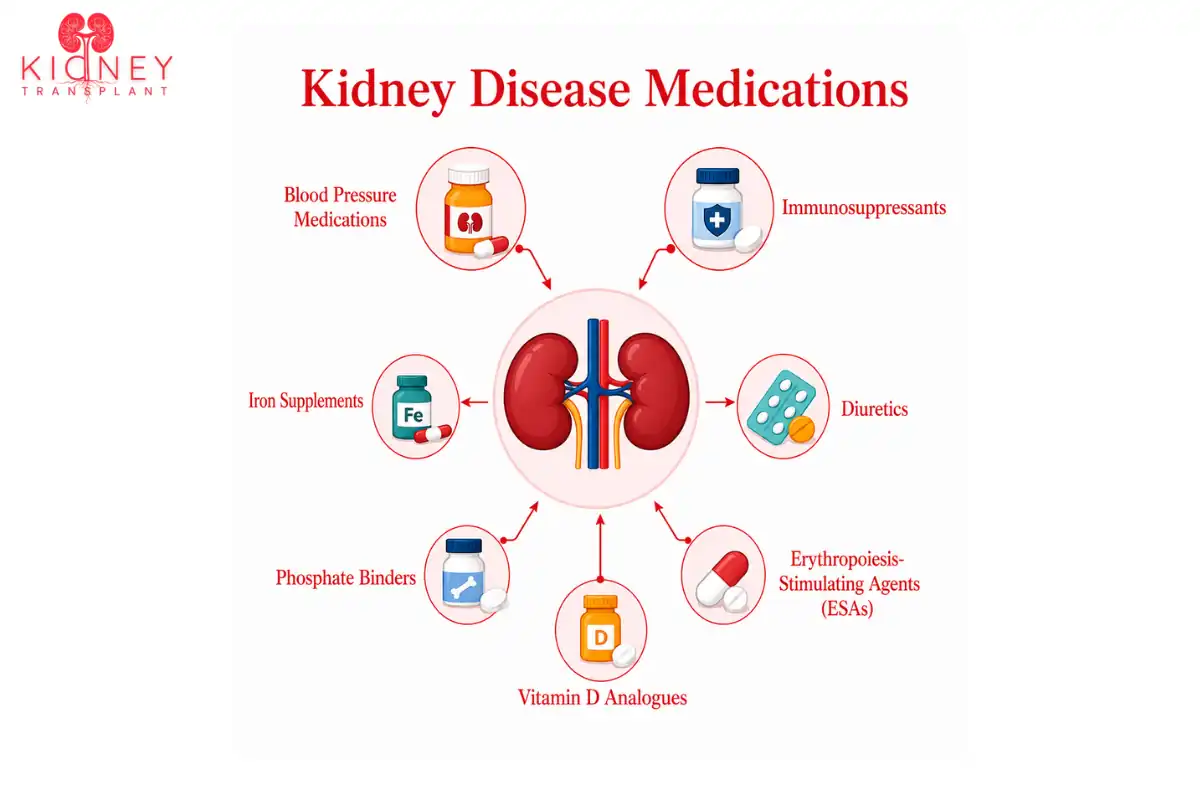
Diuretics (Water Pills)
Diuretics help remove extra fluid and salt from the body.
- Reduce swelling: Helps with puffiness in legs, feet, and around the eyes.
- Control blood pressure: Removing extra fluid lowers blood pressure naturally.
Diabetes Medications
Since diabetes is a leading cause of kidney damage, controlling sugar levels is essential.
- Insulin: Used when oral medicines are not enough to control sugar.
- GLP-1 receptor agonists: Help control sugar and support weight loss with added kidney benefits.
- Other glucose lowering medicines: Metformin and other tablets, used carefully based on kidney function.
Statins
Statins are commonly added to medication options for managing kidney disease because heart health and kidney health go hand in hand.
- Lower cholesterol: Reduces bad cholesterol buildup in blood vessels.
- Reduce cardiovascular risk: Protects the heart, which is closely linked to kidney health.
Anemia Medications
Kidneys produce a hormone that helps make red blood cells, and damaged kidneys often cause anaemia.
- Iron supplements: Corrects iron deficiency that worsens anemia.
- Erythropoiesis stimulating agents (ESAs): Helps the body produce more red blood cells.
Vitamin D and Calcium Supplements
Kidney disease affects how the body absorbs calcium and vitamin D, weakening bones over time.
- Bone health: Prevents bone thinning and fractures.
- Mineral balance: Restores healthy calcium and phosphorus levels.
Phosphate Binders
These medicines to manage kidney disease stop extra phosphorus from being absorbed by the body.
- Control phosphorus levels: Prevents bone and heart problems linked to high phosphorus.
Sodium Bicarbonate
- Treat metabolic acidosis: Corrects the acid buildup in blood that often happens with poor kidney function.