For many families, the greatest joy comes after recovery, when everyday life slowly begins to feel normal again. A successful kidney transplant allows children to focus less on illness and more on growing, learning, playing, and planning for the future. Although lifelong medical follow up remains essential, many children experience significant improvements in their overall health and quality of life.
Supporting Healthy Growth and Development
Healthy kidneys contribute to normal growth, bone development, hormone regulation, and nutrition.
After transplantation, many children experience:
- Improved appetite and better nutritional intake.
- Increased energy for learning and play.
- Better physical growth.
- Improved bone health.
- Healthier progression through puberty when appropriate.
Regular monitoring helps doctors ensure that growth and development remain on track throughout childhood and adolescence.
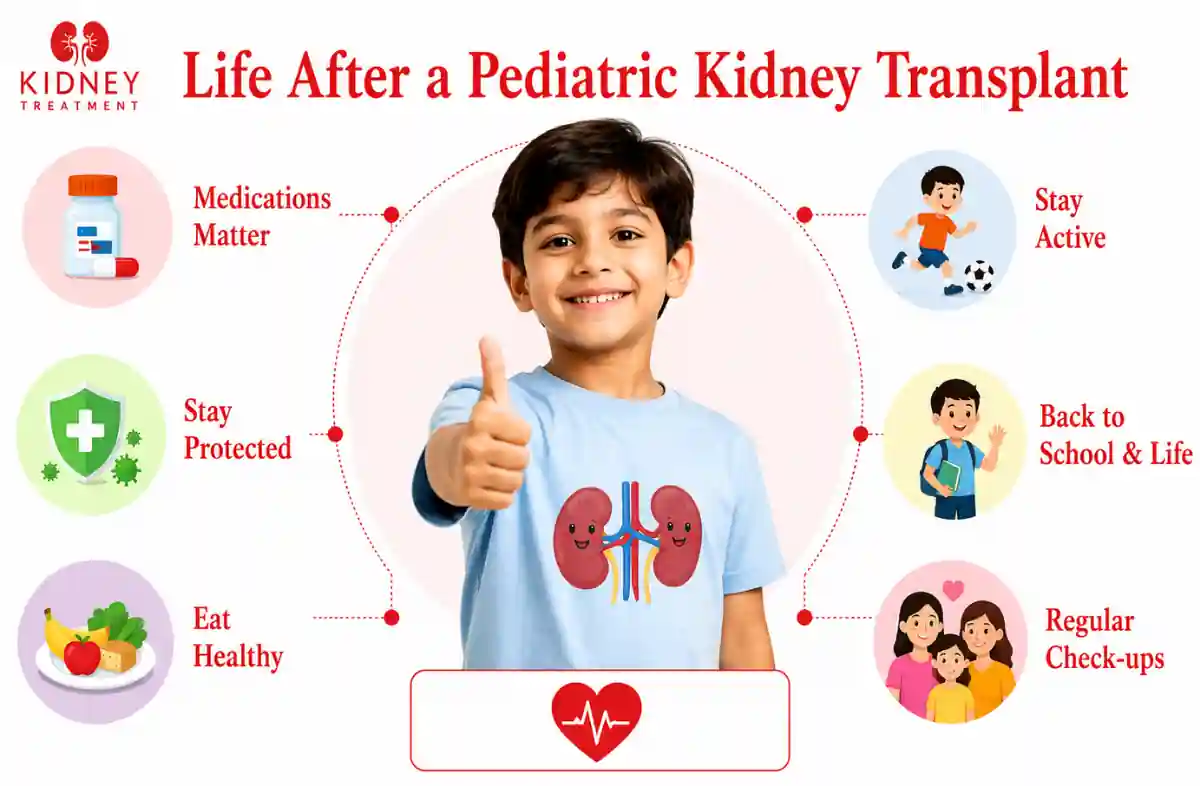
Returning to School
Going back to school is an important milestone that represents more than education it signals a return to normal childhood experiences. Most children gradually resume school once their transplant team confirms they are medically ready.
Parents should work closely with teachers and school staff so they understand:
- The child's medication schedule.
- The importance of hand hygiene.
- When medical appointments may be needed.
- Signs of illness that require prompt attention.
Open communication between families, schools, and healthcare providers helps children transition back with confidence.
Physical Activity and Play
Children naturally want to run, play, and explore.
After sufficient healing and medical clearance, regular physical activity is strongly encouraged because it supports:
- Healthy growth.
- Strong bones and muscles.
- Heart health.
- Emotional well being.
- Social development.
Contact sports may need additional discussion with the transplant team, but many children safely participate in swimming, cycling, walking, jogging, and numerous recreational activities.
Emotional Well Being Matters Too
A kidney transplant improves physical health, but emotional healing deserves equal attention.
Some children worry about:
- Looking different from their friends.
- Taking medicines every day.
- Missing school.
- Hospital visits.
- Fear that the kidney might stop working.
Parents can help by encouraging honest conversations, celebrating small achievements, maintaining normal family routines whenever possible, and seeking professional psychological support if emotional concerns persist.
Expert Insight
Parents often focus on the transplant itself. Children usually focus on something much simpler when they can go back to school, play with friends, ride a bicycle, or sleep in their own bed again. Supporting these everyday milestones is just as important as monitoring medical recovery.